
When moving out of a rental, the issue of light bulbs often generates tensions between tenant and landlord. Should they be left, taken, or replaced with new ones? The answer depends less on usage or politeness than on a specific text: decree no. 87-712, which lists the repairs for which the tenant is responsible.
This article compares what the law states, what landlords practice, and what actually happens during the exit inventory.
Light bulbs in rentals: what decree no. 87-712 provides
Decree no. 87-712 of August 26, 1987 classifies light bulbs among the minor equipment elements of the dwelling. Their replacement falls under tenant repairs, just like switches, fuses, or faucet seals.
In practical terms, this means that the tenant must keep the light bulbs in working condition for the entire duration of the lease. If a bulb burns out, it is the tenant’s responsibility to replace it, not the landlord’s.
The initial question concerns the opposite situation: what happens if the tenant removes the bulbs they purchased themselves? The answer lies in the entry inventory. If functional bulbs were mentioned, the property must be returned in a comparable condition. One must then ask should we leave the light bulbs in a rental according to what is stated in this reference document.

Entry and exit inventory: comparative table of situations
The treatment of light bulbs upon departure directly depends on what was noted at entry. Here are the most common scenarios and their legal consequences.
| Situation at entry inventory | Obligation of the departing tenant | Risk on the security deposit |
|---|---|---|
| Bulbs present and functional, mentioned | Leave functional bulbs in place | Possible retention if bulbs are absent or burned out |
| Bulbs absent or not mentioned | No obligation to leave bulbs | No risk |
| Fixtures provided by the landlord (with bulbs) | Return the complete fixture with a functional bulb | Possible retention for incomplete fixture |
| Bulbs added by the tenant on bare sockets | May remove them, unless the entry inventory mentioned bulbs | No risk if the inventory is consistent |
The table highlights a often overlooked point: the entry inventory is the only enforceable reference. Without explicit mention of bulbs in this document, the landlord cannot claim anything upon departure.
LED bulbs and replacement costs: the limits of retention on the security deposit
Since the disappearance of incandescent bulbs, homes are equipped with LED or low-energy bulbs. Their lifespan is significantly longer, but their unit price remains higher than that of old standard bulbs.
Several decisions from local courts and courts of appeal (notably the Douai Court of Appeal in February 2021 and the Paris Court of Appeal in June 2022) have established a clear framework:
- The absence of bulbs cannot justify a disproportionate retention on the security deposit. Only the local market price for supply and installation can be charged.
- A landlord cannot apply an arbitrary replacement flat rate. They must justify the actual cost of each replaced bulb.
- LED bulbs already in place and mentioned in the entry inventory must be returned in working condition, despite their higher cost.
In practice, the retention for missing bulbs rarely exceeds a few euros per light point. Jurisprudence penalizes landlords who inflate this line on the return account.
Practices of major landlords and property managers
Institutional landlords like CDC Habitat or Foncia have updated their tenant guides in recent years. Their recommendations converge: leaving the bulbs in place upon departure simplifies the inventory and avoids any disputes.
Some of these guides now specify that the tenant must return functional bulbs on each light point that had them at entry. This clarification aims to cover the case of LED bulbs, the replacement of which by the landlord would be charged to the departing tenant.
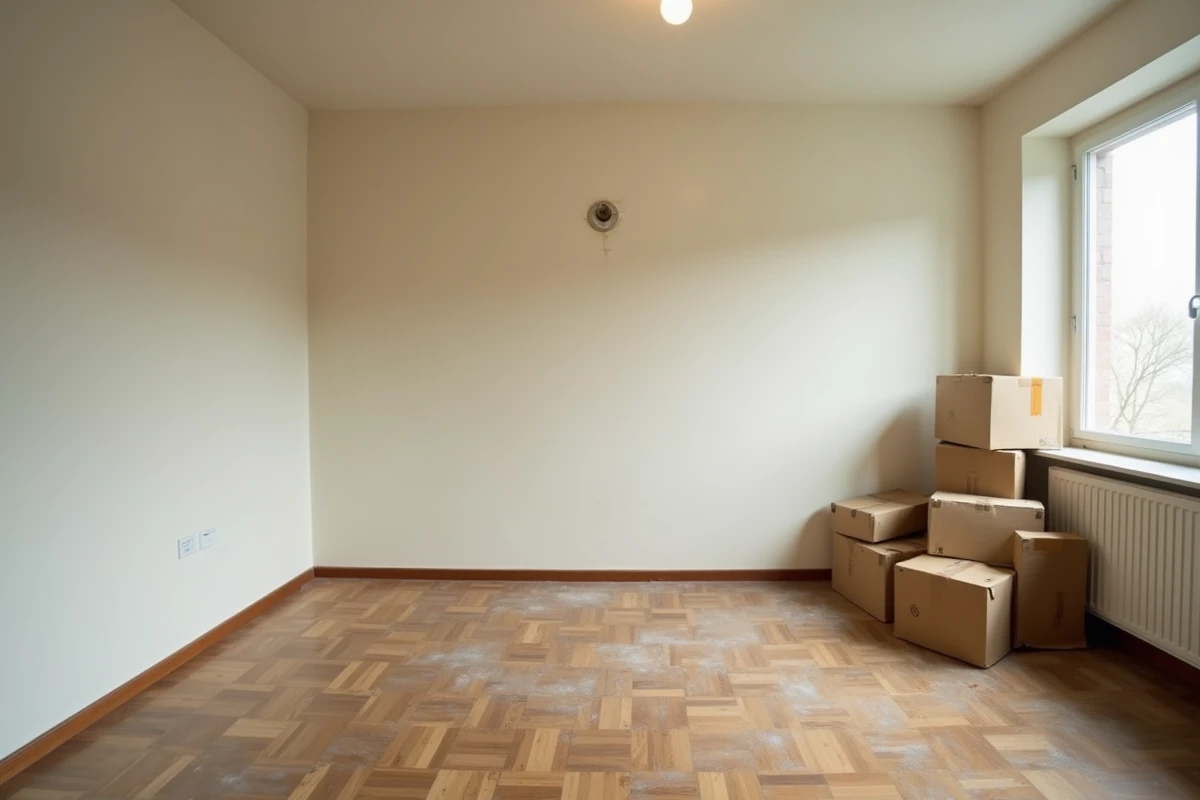
Fixtures, sockets, and bulbs: confusions to avoid during the inventory
The distinction between fixture, socket, and bulb is at the root of most disputes on this subject. The fixture (ceiling light, wall sconce, pendant) is part of the dwelling’s equipment if it was installed by the landlord. The socket is part of the fixed electrical installation. The bulb, on the other hand, is a consumable.
The tenant who installed their own fixtures must remove them and return the original equipment. If they replaced a socket or ceiling light without the landlord’s agreement, they must restore the initial situation.
However, if the property was delivered with simple sockets without bulbs (and the entry inventory confirms this), the tenant has no obligation to provide bulbs upon departure. This situation is common in older homes or partially furnished rentals.
Three checks before returning the keys can help avoid most disputes:
- Review the entry inventory for each room and compare the number of bulbs mentioned with the current situation.
- Replace burned-out bulbs with equivalent wattage and base models.
- Photograph each light point lit on the day of the exit inventory to have proof in case of a dispute.
The exit inventory remains the decisive moment. A tenant who returns a property with all functional bulbs and supporting photos leaves no room for an abusive retention. Only what is stated in the entry inventory can be demanded upon departure, and any retention must correspond to the actual replacement cost, not a flat rate.