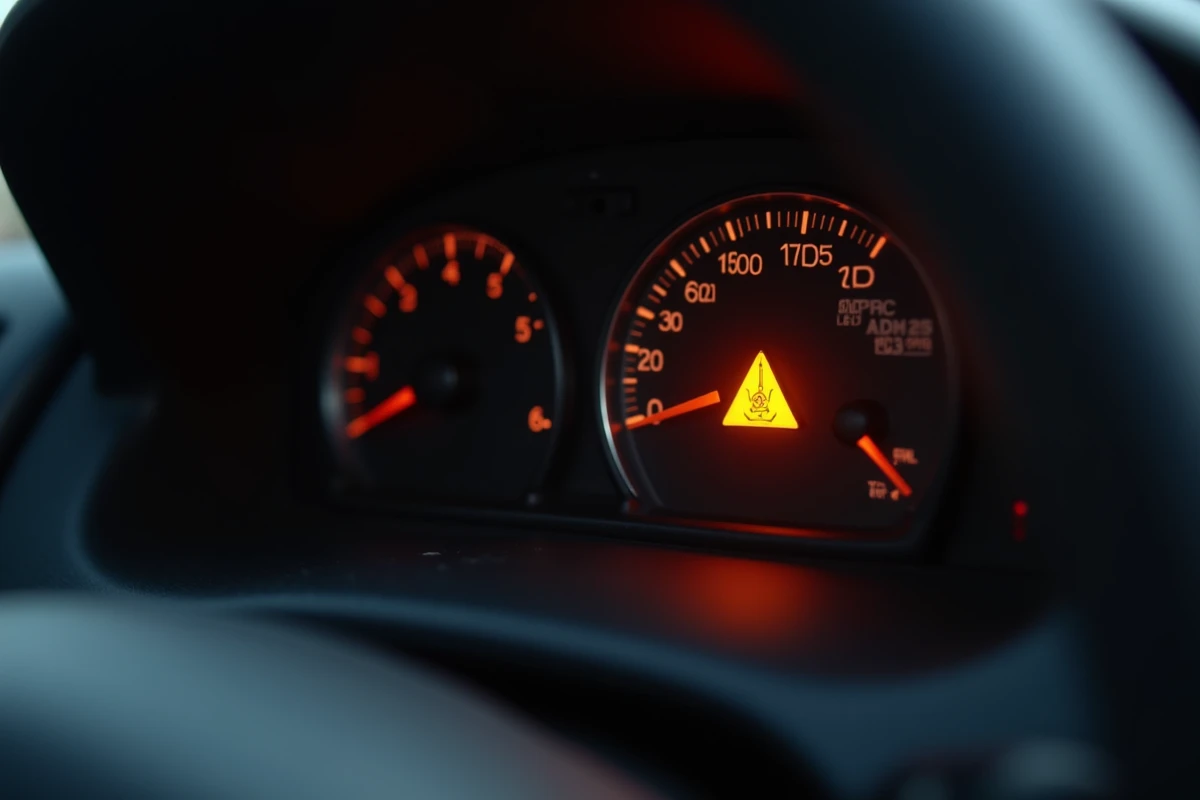
The orange triangle warning light on a Peugeot 207 acts as a general alert signal. It does not indicate a specific component; instead, it relays an anomaly detected by one of the vehicle’s control units, often accompanied by a message on the dashboard screen. Understanding this mechanism helps avoid confusing a minor alert with a serious malfunction, or vice versa.
ESP Wiring and Humidity: The Silent Breakdown of the Peugeot 207
Feedback from Peugeot specialized forums indicates a rising trend in failures related to ESP sensors whose wiring deteriorates due to exposure to humidity. This phenomenon particularly affects 207s used in winter conditions, where salt and water infiltrate the connectors located at the wheel hubs.
The orange triangle then lights up intermittently, often during acceleration or while turning. The message displayed on the dashboard may mention “pollution control fault” or “ESP/ASR fault,” depending on the generation of the control unit. However, the two alerts are not related mechanically.
To delve deeper into the meaning of the orange triangle warning light on the Peugeot 207, it is essential to distinguish the symptom (the light) from the actual cause, which requires reading the OBD fault code recorded by the control unit.

Cleaning the connectors and visually inspecting the cable sheaths can sometimes resolve the issue without needing to replace any parts. However, if the ABS sensor itself is corroded, replacement becomes the only reliable option.
Diesel vs. Gasoline: The Orange Triangle Indicates Different Issues
On a 207 HDi, the orange triangle frequently accompanies a failed particulate filter (FAP) regeneration. Short city trips prevent the engine from reaching the necessary temperature to burn off the soot accumulated in the filter. The control unit then interrupts the regeneration cycle and turns on the warning light.
Driving for about twenty minutes at a sustained speed on a highway often restarts the procedure. If the warning light persists after several attempts, the FAP may be clogged to the point of requiring professional cleaning or replacement.
On gasoline versions, the orange triangle is more often related to ABS/ESP electronics or a faulty sensor (lambda probe, boost pressure sensor on turbo versions). Reading the fault codes via an OBD-II port remains the most direct way to differentiate between these hypotheses.
Technical Inspection and OBD-II Diagnostics: What Changes for Used 207s
Post-2025 European requirements strengthen the role of OBD-II diagnostics during technical inspections for used vehicles. Reading fault codes becomes a pass criterion, even for models like the 207 that were not subject to this level of examination when they left the factory.
An illuminated orange triangle at the time of the technical inspection can therefore lead to a re-inspection. Erasing the codes without addressing the cause is no longer sufficient: the inspector checks the consistency between the control unit data and the actual state of the vehicle.
Field reports also indicate a frequent correlation between the orange triangle and minor brake fluid leaks on high-mileage 207s. These leaks, often located at the rear calipers, remain invisible without inspection under the vehicle. They go unnoticed until the level drops sufficiently to trigger the ABS alert, followed by the general triangle.
- Check the brake fluid level in the reservoir under the hood before any electronic intervention
- Visually inspect the brake hoses and calipers for signs of moisture or seepage
- Have the OBD-II fault codes read to accurately identify the system at fault before replacing anything
Peugeot 207 Youngtimer: Diagnosing Without Modern Diagnostic Tools
The Peugeot 207, produced between 2006 and 2014, is gradually entering the youngtimer category. Some well-preserved examples are gaining value among collectors, particularly the RC, GTi, or limited edition versions. For these vehicles, each intervention must preserve the authenticity and heritage value of the model.
The problem arises right from the diagnosis: manufacturer diagnostic tools compatible with the PSA protocol of this generation are no longer always available at dealerships. Generic OBD-II tools read standard engine codes but do not always read the specific codes for Peugeot’s BSI (intelligent service box) control units, which manage part of the lighting, anti-theft systems, and dashboard alerts.

For owners of collectible 207s, several options exist:
- Acquire a second-hand PSA-compatible diagnostic tool (like Lexia or DiagBox) rather than a generic tool limited to standard OBD codes
- Consult independent mechanics specialized in French vehicles from the 2000s, who still have the tools and expertise for these electronic architectures
- Prioritize the repair of original wiring harnesses rather than replacing them with aftermarket parts, to maintain wiring compliance with manufacturer specifications
- Document each intervention with the read fault codes and replaced parts, which constitutes a technical history appreciated during resale
The available data does not allow for a definitive conclusion on the exact impact of a non-compliant intervention on the value of a specific model. Field feedback varies on this point, with some collectors accepting minor modifications while others demand complete traceability.
The orange triangle warning light on a 207 is never trivial, but it is also not always synonymous with costly repairs. Reading the fault codes remains the first step to take. On an aging vehicle or one valued as a youngtimer, choosing the right diagnostic tool is as important as the repair itself.