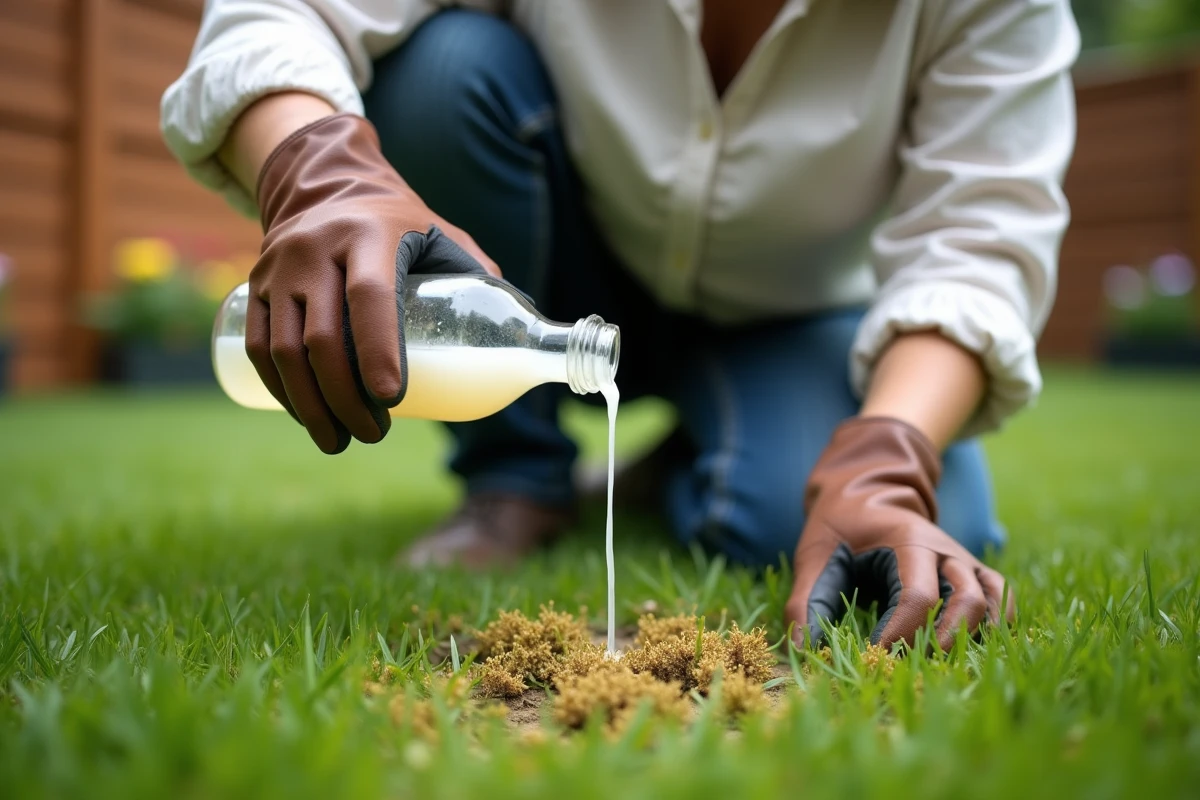
White vinegar on the lawn is appealing for its simplicity: spray, watch the leaves turn brown in a few hours, consider the problem solved. In practice, regrowth usually occurs within two to three weeks. Its actual functioning on a lawn deserves attention before emptying the bottle.
Contact herbicide on grass: why vinegar burns without killing
The acetic acid in white vinegar acts through direct contact. It destroys the cuticle of the exposed leaves, causing visible drying within a few hours. On a young weed seedling, the result may seem convincing.
The problem is structural: vinegar does not reach the roots. On an established grass, a deep-rooted dandelion, or creeping couch grass, the aerial part burns but the root system remains intact. Regrowth generally occurs within two to three weeks.
When applied directly to a lawn to target weeds, vinegar makes no distinction between the weed and the neighboring grass. It burns everything it touches. You end up with scorched areas in the middle of the lawn, without having permanently eliminated the targeted plant. To better understand the consequences of vinegar on the lawn, one must look beyond the immediate visual effect.
Vinegar concentration and real effectiveness on lawn weeds
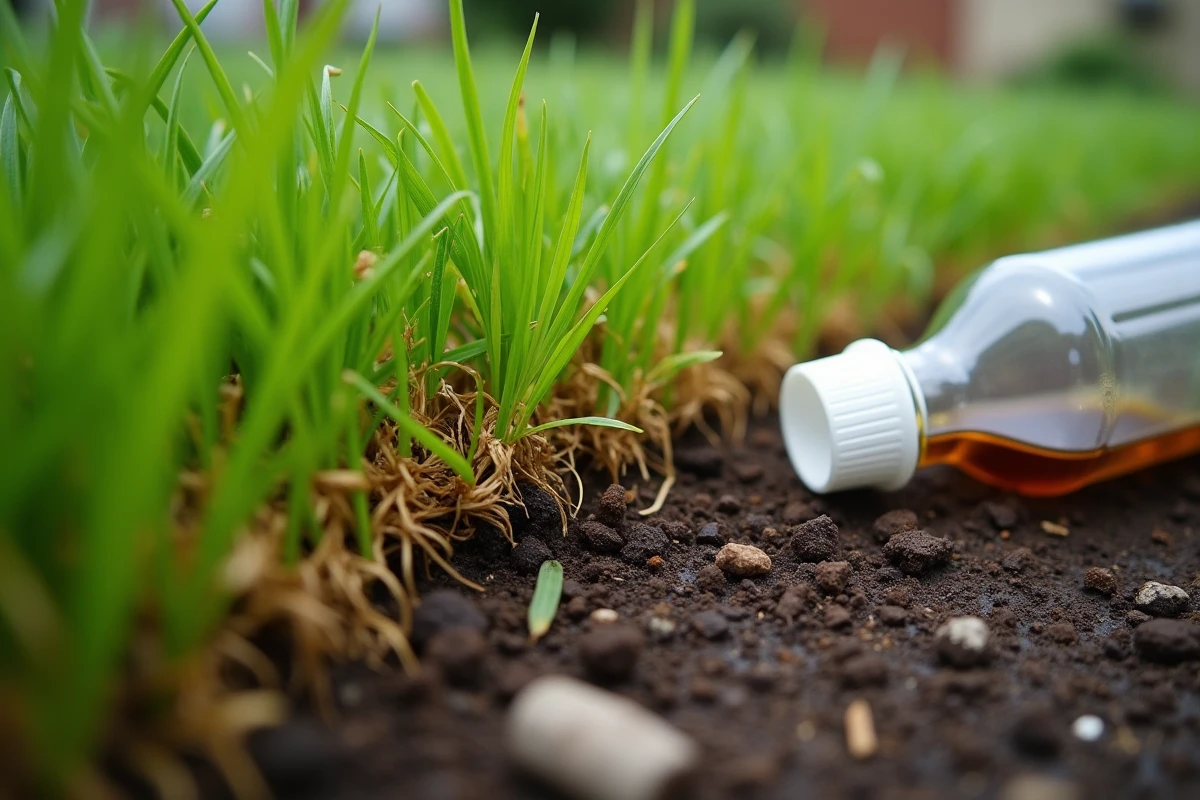
Food-grade white vinegar typically contains between six and eight percent acetic acid. At this concentration, the effect on well-rooted weeds remains superficial. The leaves turn yellow, but the plant regrows from the crown or root.
More concentrated vinegars exist, but their use raises two concrete difficulties on a lawn.
- A higher concentration accelerates the burning of tissues, including those of the surrounding grass, which expands the area of collateral damage on the lawn.
- The effectiveness remains limited to the aerial parts: even with a stronger product, the roots of perennials are not affected, and regrowth occurs nonetheless.
- The local acidification of the soil can disrupt microorganisms and temporarily alter the pH of the top layer, which does not help the grass recover.
In other words, increasing concentration does not resolve the fundamental flaw of vinegar as a herbicide on lawns. You achieve a more visible action, but not a more lasting action on rooted weeds.
Vinegar as a herbicide and French regulations: a often overlooked point
There are dozens of recipes using white vinegar, salt, and dish soap presented as natural alternatives to herbicides. However, French law strictly regulates their use.
In France, the Labbé law tightly controls the use of phytopharmaceutical products by individuals. Vinegar used as a herbicide does not have marketing authorization (AMM) for this use. Just because a product is food-grade does not mean it is authorized as a plant treatment product.
This regulatory distinction is not trivial. It explains why no serious manufacturer markets vinegar with a “lawn herbicide” label in France. Approved biocontrol products exist, but supermarket white vinegar is not among them for herbicidal use.
The addition of salt: an additional risk for the soil
The vinegar-salt-water recipe worsens the situation. Salt (sodium chloride) does not degrade in the soil. It accumulates, disrupts water absorption by the roots, and can make an area permanently inhospitable for both grass and future plantings.
Salt sterilizes the soil well beyond the targeted area, especially through runoff after rain. On a lawn, this is exactly the opposite of the desired outcome.
Concrete alternatives for weeding a lawn without vinegar
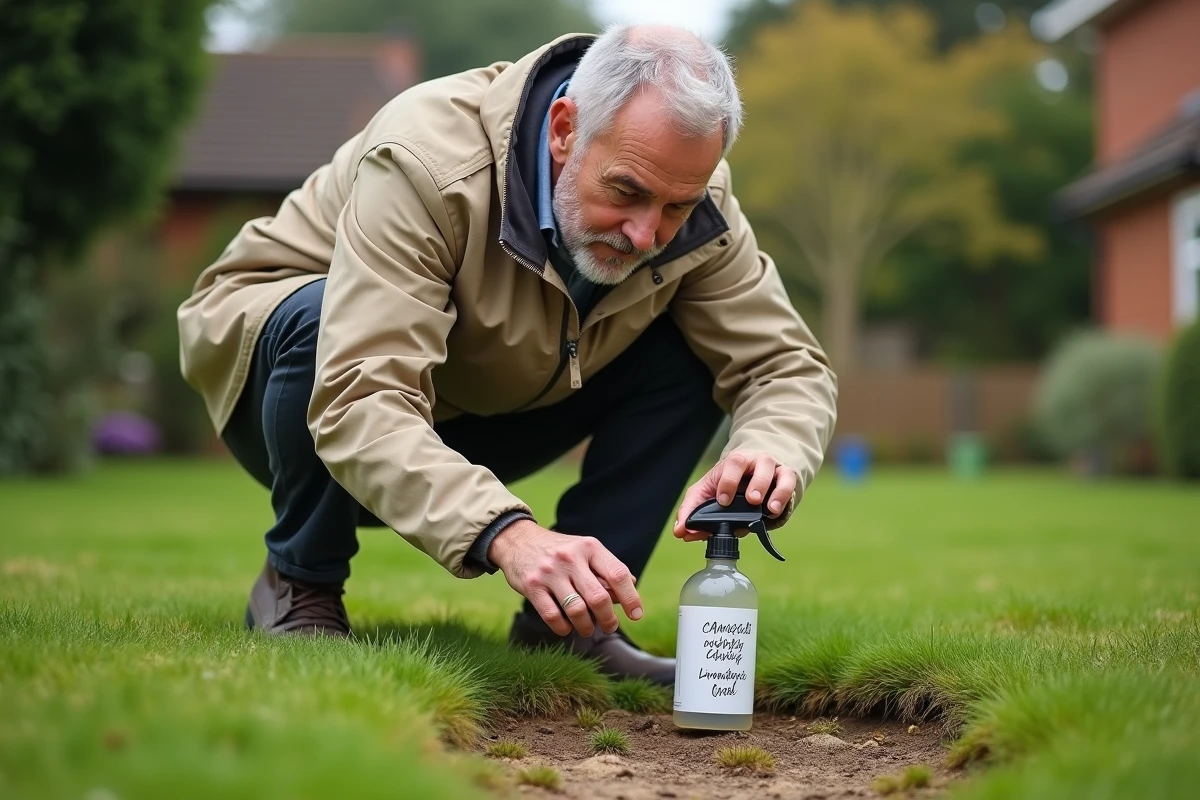
If vinegar is not the solution for a lawn, what realistic approaches remain to manage weeds without resorting to synthetic chemical products?
Manual removal remains the most reliable method for tap-rooted weeds (dandelion, plantain). A weeding knife allows for the extraction of the root to a sufficient depth. It is labor-intensive over a large area, but it is the only technique that truly removes the plant.
A dense and well-nourished lawn is the best prevention. A lawn mowed to the right height, fertilized in spring and autumn, leaves little space for weeds to establish. The effect of overseeding in sparse areas is often underestimated: filling in the gaps deprives weeds of light at the soil level.
- Mowing regularly without cutting too short (keeping at least one-third of the blade height) limits the germination of weeds.
- A surface application of compost improves soil structure and promotes deep rooting of the grass.
- Thermal weeding (localized heat) can complement manual removal in hard areas adjacent to the lawn, such as borders or patio joints.
Feedback varies on the effectiveness of mulching at the edge of the lawn to slow lateral weed invasion, but the principle of plant competition remains the strongest lever in the long term.
White vinegar has its place in the garden for cleaning tools, descaling a sprayer, or disinfecting pots. On the lawn, its action is limited to surface burning that damages the lawn as much as the targeted weeds, without addressing the problem at the root. Regular lawn maintenance (appropriate mowing, fertilization, overseeding) yields more lasting results than repeated acidic treatments.