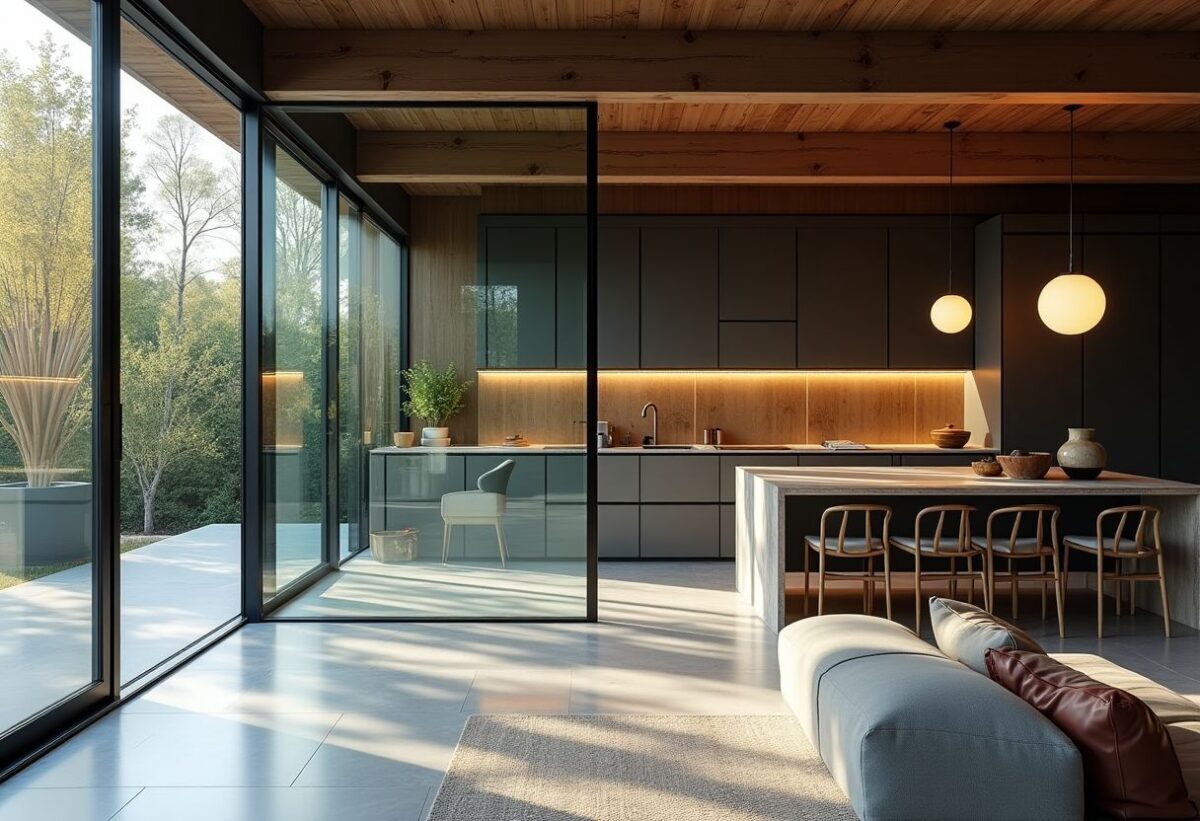
Glass walls, once confined to artists’ studios or industrial spaces, are now making their way into our interiors. These glazed structures, which combine aesthetics with practicality, transform homes into true showcases of light. Whether it’s to separate a kitchen from a living room, create a partition in a master suite, or maximize brightness in an office, glass walls prove to be a valuable asset for redefining spaces. Their ability to create warm atmospheres while ensuring a subtle separation between rooms makes them particularly sought after in the field of interior design.
Origins and evolution of the glass wall
The history of the glass wall dates back several centuries, showcasing a fascinating evolution from simple utilitarian glazing to a masterful architectural piece.
- Medieval origins: The first glass walls appeared in the Middle Ages, particularly in cathedrals, where they served to tell biblical stories through colored stained glass.
- Industrial revolution: In the 19th century, the rise of industry and glass production techniques led to the emergence of large glazed facades in factories and workshops.
- Modernism: In the 20th century, the modern movement advocated for the use of glass for its ability to erase the boundaries between interior and exterior, allowing the landscape to be invited into homes.
- Contemporary renaissance: Today, the glass wall stands out as a central element in interior architecture, allowing for clever manipulation of light and volumes.
The aesthetic and practical advantages of glass walls
The glass wall is much more than just a decorative element; it offers multiple advantages that justify its growing adoption in modern homes.
Natural light: A glass wall allows a room to be flooded with light, creating a warm and welcoming atmosphere. This not only promotes the well-being of the occupants but also enables energy savings by reducing the need for artificial lighting.
Delimitation without partitioning: The interior glass wall allows for the separation of spaces without partitioning, thus preserving visual continuity while delineating distinct functional areas.
Timeless aesthetics: Whether in an industrial, modern, or classic style, the glass wall integrates harmoniously into any type of interior, adding a touch of character and sophistication.
Integrating the glass wall into your home
To integrate a glass wall into your living space, several aspects must be considered to optimize its visual and functional impact.
- Define the location: Choosing the location of the glass wall wisely is essential. For example, a glass wall between a kitchen and a living room can allow for monitoring children while preparing meals.
- Choose the material: The choice of material for the structure – steel, aluminum, or wood – will influence not only the aesthetics but also the durability of your glass wall.
- Customization: Opting for a custom glass wall will allow it to be perfectly adapted to your space while meeting your specific needs in terms of decoration and ergonomics.
- Practical considerations: Thinking about maintenance and ease of cleaning is essential to preserve the beauty of your glass wall over time.