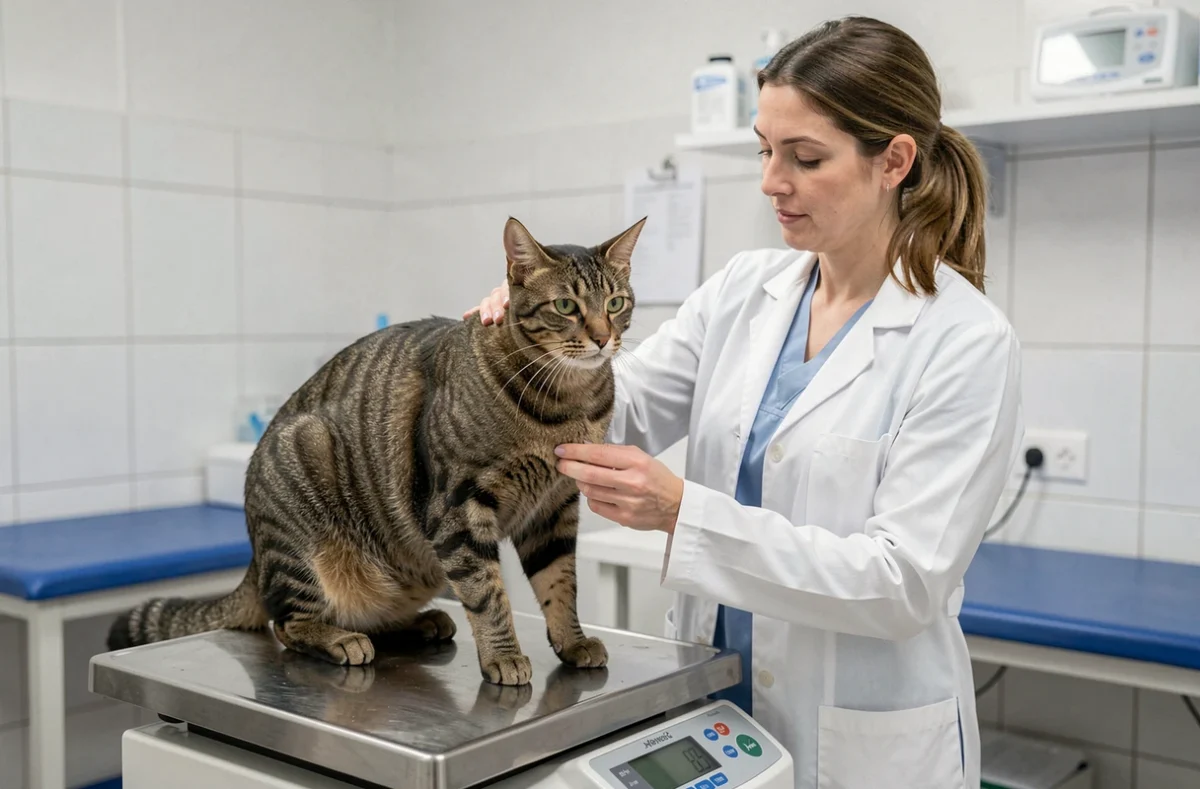
An adult cat’s weight cannot be interpreted as an isolated number on a scale. A body condition score, along with breed, sex, neuter status and activity level, determines whether 6 kg is a healthy size or excess body fat. Understanding these factors helps you interpret what the scales are telling you.
Body fat versus muscle mass: what the scales don’t tell you
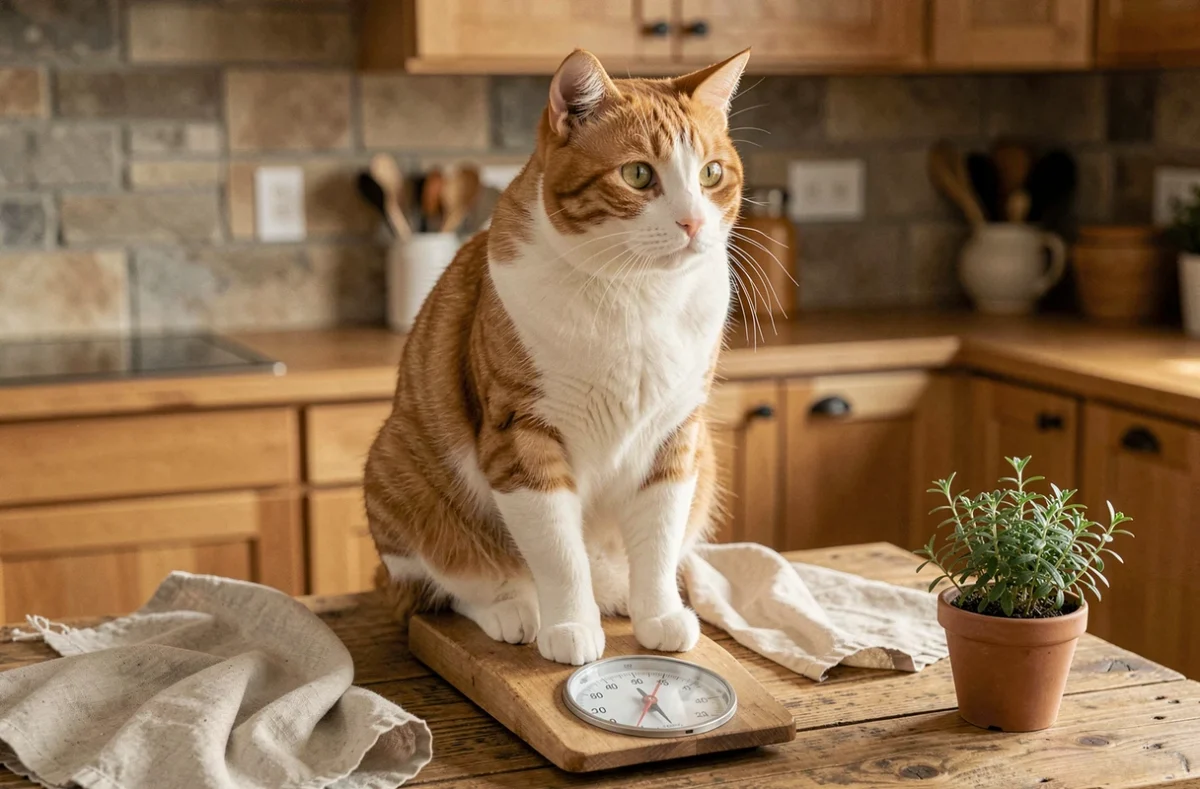
Two cats can weigh exactly 6 kg and have very different body compositions. A British Shorthair male of this size often has a broad frame and dense musculature, putting him at the upper end of his breed’s range without excess body fat.
By contrast, a female domestic shorthair of the same weight has probably accumulated abdominal fat, since the expected range for this build is closer to 3–4.5 kg. The same number on the scales can reflect very different physiological realities.
This discrepancy becomes more pronounced with age. A mature cat may lose muscle while gaining fatty tissue, so its weight stays stable even as its physical condition deteriorates. Relying on kilograms alone means overlooking this silent redistribution. To explore in more detail whether a 6 kg cat is within the normal range, you need to consider its weight alongside other indicators.
Cat body condition score: the tool veterinarians use
Veterinarians use the body condition score (BCS), a scale from 1 to 9 that assesses body shape and fat reserves through visual examination and palpation. This score is a more useful alternative to the idea of a single ideal weight.
- A score of 1 to 3 indicates a very thin cat: the ribs, spine and pelvic bones are visible without palpation.
- A score of 4 to 5 corresponds to an ideal weight: the ribs are easy to feel beneath the fingers, the waist is visible from above, and abdominal fat is minimal.
- A score of 6 to 9 indicates progressively increasing excess weight, up to obesity: the ribs become difficult to feel, the abdomen rounds out and the waistline disappears.
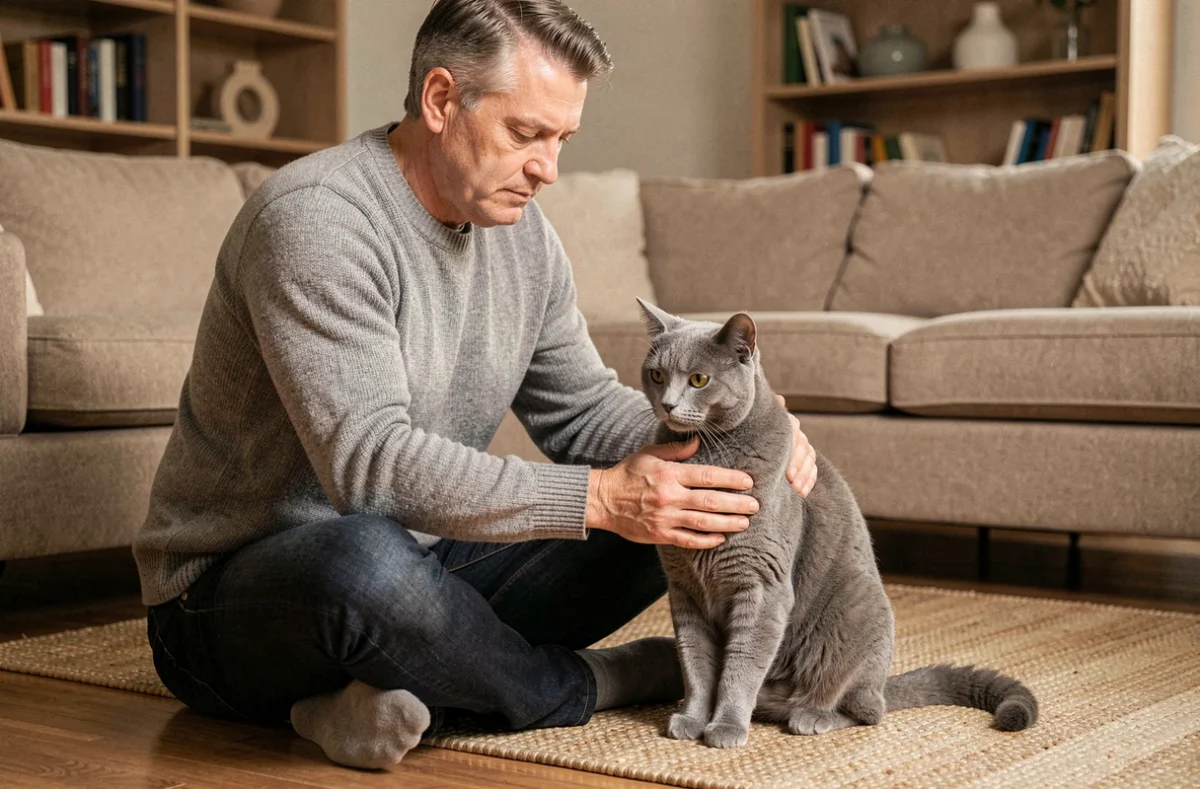
The assessment takes less than a minute. Place your palms flat against your cat’s sides without pressing: if you can feel the ribs beneath a thin layer of tissue, the score is probably between 4 and 5. If you have to press to find them, the cat is likely above a score of 6.
Next, look at your cat from above. A visible indentation between the ribs and hips confirms a defined waist, a sign of a balanced build. An oval silhouette with no narrowing at the waist suggests excess fat.
Breed, sex and neutering: three factors that shift the benchmarks
Expected weight can vary threefold depending on breed. An adult male Siamese weighs around 3–4 kg, a Birman 4.5–6.5 kg, and a Maine Coon 7–11 kg. Comparing a 6 kg mixed-breed cat against a single standard is therefore clinically meaningless.
How sex affects weight
Males weigh more on average than females of the same breed. Among domestic shorthairs, the difference between a male and a female at their ideal weight can reach 1–1.5 kg. A 5.5 kg male domestic shorthair is still within the normal range, while a female of the same weight would be outside it.
How neutering affects metabolism
Neutering reduces energy requirements, while appetite often stays the same. This imbalance leads to gradual weight gain, sometimes without any noticeable increase in food intake. Sedentary neutered cats tend to exceed the upper end of their breed’s weight range even when their owners haven’t changed their diet at all.
Regular weight checks—for example, once a month—can help you spot a gain of a few hundred grams before it becomes established. This individualized approach is more useful than a one-off comparison with a chart of average weights.
Overweight cats: real health risks and the limits of home diets
Excess weight in cats increases the risk of serious health conditions, including diabetes, arthritis, pancreatitis and skin problems. A chronically overweight cat puts more strain on its joints and metabolism than its body can tolerate.
The temptation to sharply reduce food portions to address the problem carries another risk. Restricting food too quickly can cause hepatic lipidosis, a potentially fatal buildup of fat in the liver. Unlike a dog’s liver, a cat’s liver does not tolerate prolonged fasting or a severe calorie deficit well.
Having a veterinarian set a target weight and rate of weight loss before changing your cat’s food intake is the safest approach. The vet will adjust the amount and type of food according to the cat’s body condition score, age and activity level. A supervised diet aims for gradual weight loss over several months while preserving muscle mass.
Six kilograms on a cat’s scales is neither a verdict nor a reason to panic. Breed, sex, neuter status, body shape and how easily you can feel the ribs all provide a much more reliable picture than a number alone. Regular body condition scoring, at home or during a veterinary visit, offers an assessment that average-weight charts cannot replace.