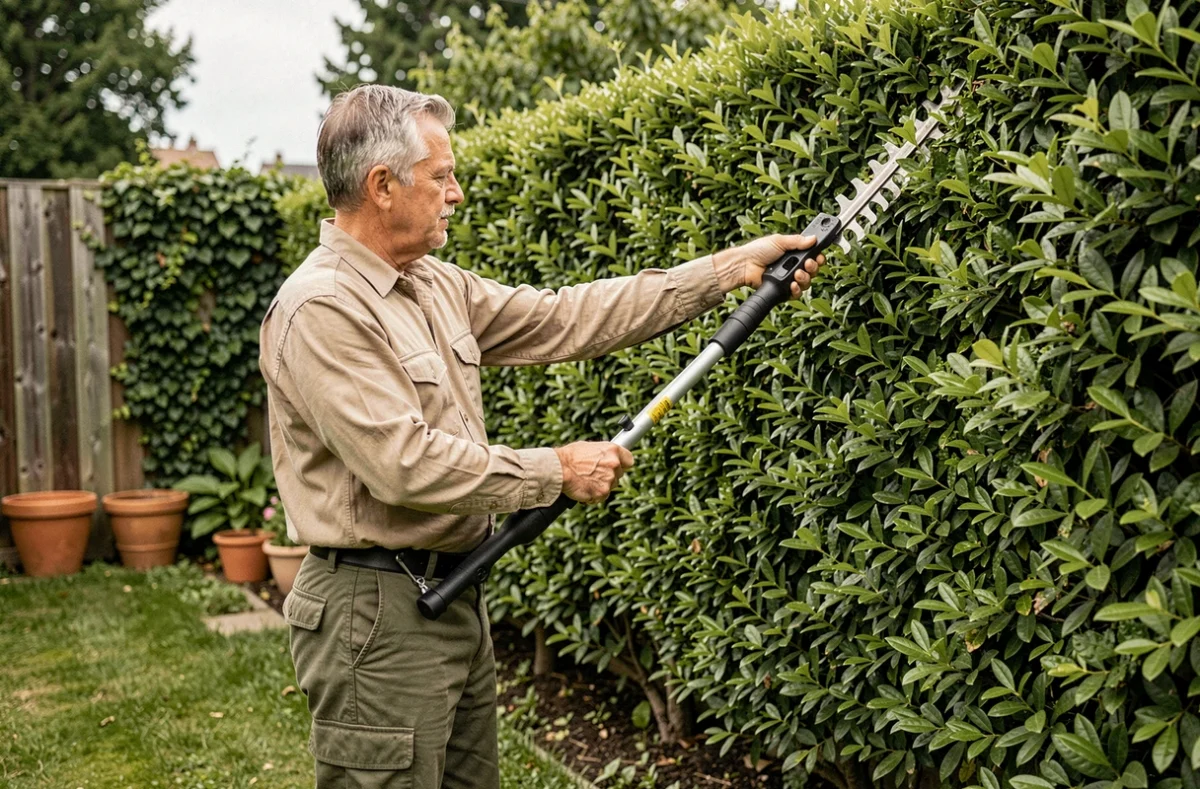
A telescopic hedge trimmer differs from a standard model thanks to its extendable pole, which lets you trim high or hard-to-reach areas without climbing a ladder. Choosing the right telescopic hedge trimmer for your garden means weighing several technical factors: the type of hedge, the power source, pole length and the tool’s overall balance.
Balance and weight distribution: the factor product specifications don’t show
Most buying guides compare models by their total weight. That figure matters, but it doesn’t tell the whole story. A tool of the same weight can feel comfortable or exhausting depending on where its centre of gravity sits.
When the cutting head is raised overhead, leverage magnifies every gram at the end of the pole. The tool’s balance matters just as much as its overall weight. Two tools with the same listed weight can feel radically different if one has most of its weight near the motor and the other near the blade.
The only reliable way to assess this is to hold the tool with the cutting head positioned as it would be during actual use, preferably raised overhead. Online catalogues at taille-haie-telescopique.com let you compare technical specifications before visiting a store to try the tool in person.
A shoulder harness or a rotating auxiliary handle can also make a big difference. During an extended trimming session, these accessories reduce muscle fatigue far more effectively than shaving a few hundred grams off the tool’s weight.
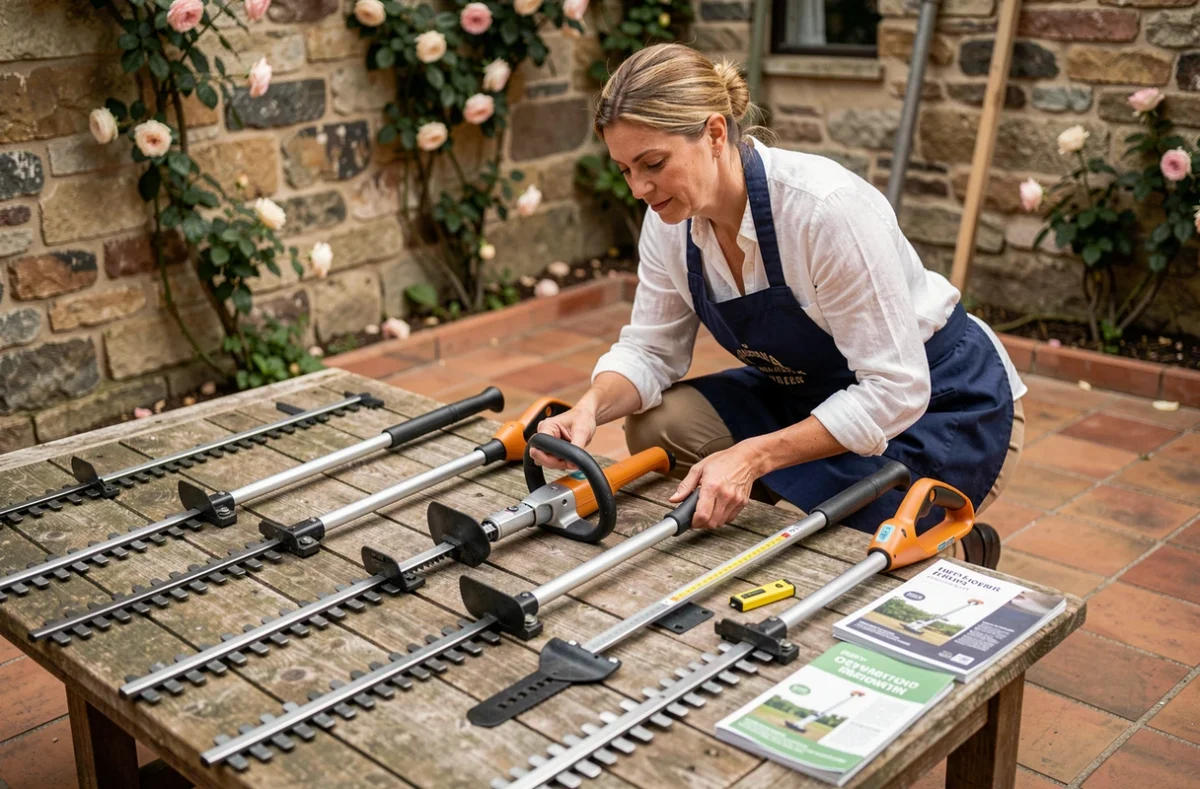
Power source for a telescopic hedge trimmer: battery, corded electric or petrol
The choice of power source depends less on personal preference than on the layout of your garden and the type of hedge you need to maintain.
Battery
Battery-powered models offer complete freedom of movement, with no cable to keep an eye on. They’re suitable for medium-sized gardens where the hedge isn’t excessively long. Actual runtime decreases when cutting dense branches, as the motor has to work harder. Checking whether the battery is compatible with other tools from the same brand (lawn mower, blower) can save money across your garden equipment.
Corded electric
Lighter than other types, corded hedge trimmers are still a good choice when there’s a power outlet nearby. They deliver consistent power, without the gradual drop-off of a battery running low. However, the cable means you’ll need to work methodically to avoid cutting through it with the blade.
Petrol
A petrol engine delivers more power and doesn’t depend on an electrical supply. This type of power source is suited to thick hedges, long stretches or gardens far from any outlet. The trade-offs are significantly higher noise levels, greater weight and regular engine maintenance (spark plug, filter, fuel mix).
The guaranteed sound power level is shown on the labels of powered outdoor equipment. This marking lets you objectively compare the noise emitted by different models before buying.
Pole length and cutting angle: match the tool to the shape of your hedge
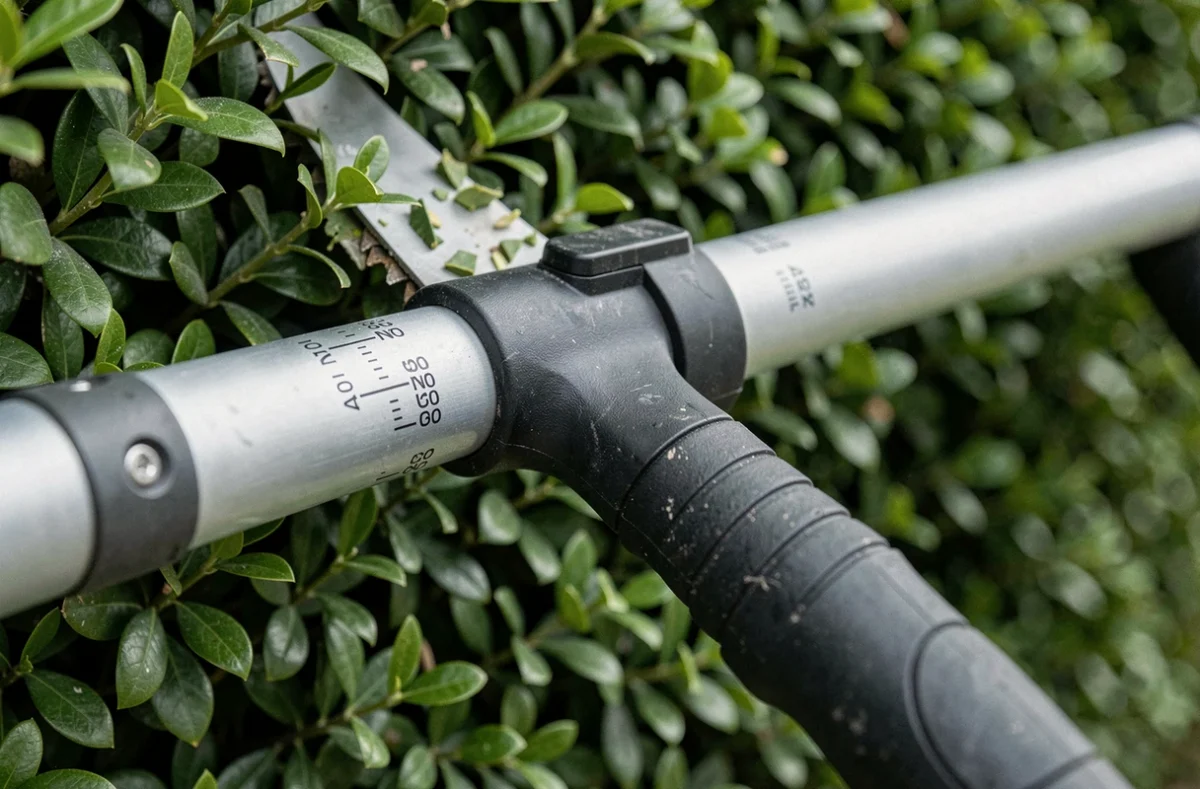
Pole length determines the maximum height you can reach from the ground. A telescopic model with an adjustable pole lets you trim both the top of a tall hedge and shorter shrubs, adjusting the length as needed.
But height isn’t the only factor. The shape of the hedge determines the cutting angle you need. A wide hedge needs to be trimmed horizontally across the top, which calls for an adjustable cutting head. A narrow, tall hedge mainly requires vertical trimming, where the pole needs to remain steady without wobbling.
Telescopic hedge trimmers generally have a pivoting head that can be set to several positions. The precision of the head’s locking mechanism varies from model to model. A notched lock provides fixed, reliable positions, while a continuous adjustment system offers greater precision but may slip under pressure.
One often-overlooked point: control decreases when the pole is fully extended. The farther the blade is from your hands, the more vibrations are amplified and the less cleanly it cuts. Working with the pole at an intermediate length almost always produces a neater result.
Blade and cutting capacity: choose according to branch thickness
A hedge trimmer blade is defined by two related technical specifications:
- The tooth spacing (or gap between the blades) determines the maximum branch diameter the tool can cut. Spacing greater than 16 mm is suitable for dense hedges with woody shoots.
- The cutting action, single or double, affects the quality of the finish. A double-action blade cuts in both directions, reducing vibration and delivering a cleaner result than a single-action blade.
- Blade length determines the width cut in each pass. A longer blade covers more ground but makes the tool less manoeuvrable around corners and topiary shapes.
For laurel, photinia or privet hedges, whose branches become woody quickly, generous tooth spacing and sufficient power help prevent clogging and torn cuts that weaken the plant.
Noise regulations: a factor to check before buying
Choosing a telescopic hedge trimmer isn’t just about mechanical performance. Permitted hours for using powered garden equipment vary by municipality and local regulations. Before opting for a powerful petrol model, check the local rules to avoid buying a tool you can’t use at the times you plan to trim.
A battery-powered or electric model is significantly quieter and offers a wider window for use without risking disputes with neighbours. This is especially important in densely populated residential areas, where adjoining gardens make noise more disruptive.
The noise level shown on the tool provides a basis for comparison, but doesn’t guarantee that neighbours won’t find it disruptive. The length of the session and proximity to homes matter just as much as decibel readings taken in a laboratory.
The right telescopic hedge trimmer for a particular garden comes down to balancing reach, power source, blade quality and local noise restrictions. Trying the tool in your hands to assess its balance remains the most reliable step before buying.