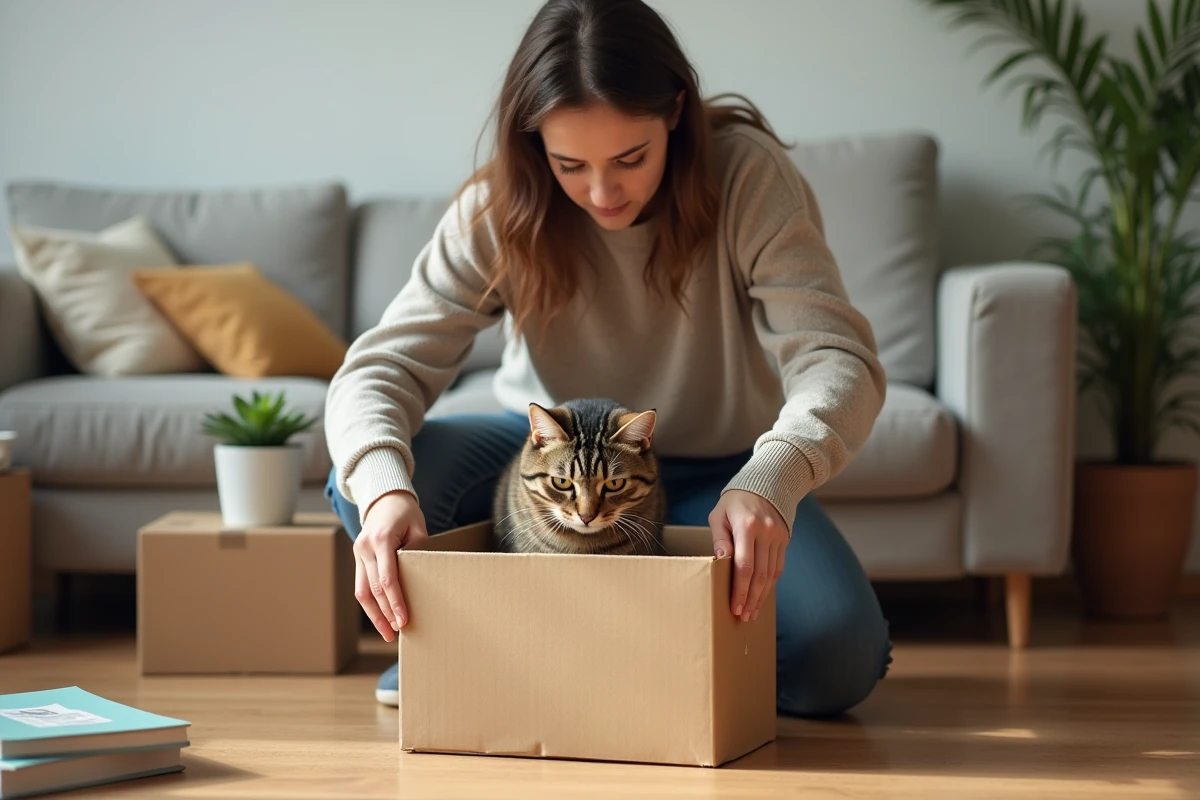
The territorial upheaval spares no cat, no matter how sociable it may be. After a move, it is not uncommon to see a feline refuse food or take up residence under a piece of furniture for days. The adaptation issues, very real, are among the primary causes of domestic mishaps in the weeks following arrival in an unfamiliar home.
To help your cat through this delicate transition, it’s best to focus on concrete adjustments that are often overlooked. A few well-targeted actions are enough to defuse risks and encourage a smooth acclimatization, regardless of its personality.
Understanding the cat’s stress in the face of territorial change
The cat hardly tolerates the upheaval of its landmarks. When it leaves its old home, the slightest familiar corner disappears, taking with it its scents and the invisible traces of its pheromones. This olfactory map has been patiently woven, and it draws its emotional security from it. Overnight, everything must start anew: new place, new sounds, strangers to apprehend; all of this is enough to unsettle even the most stoic of felines.
The new house then resembles a blank, almost hostile territory. The signs are unmistakable: it eats less, isolates itself, and sometimes over-grooms. Its world is turned upside down, and the disrupted routine makes adaptation more challenging. If other animals cross its path or the environment is filled with unusual noises, anxiety quickly sets in.
To restore some order to this emotional chaos, the cat will gradually reinvest the spaces, claiming them with discreet markings. Relying on Maison Créa’s advice helps structure each step: establishing reassuring routines, reinstating olfactory markers, and carefully controlling each interaction. The goal? To give the cat a sense of control, to soothe this persistent stress.
It is through observation and patience that one perceives the subtlety of this adaptation process. The cat does not navigate this phase with a simple wave of a magic wand; it takes the owner’s full attention to defuse tension and prevent everyday incidents.
What landmarks to establish to reassure your companion upon arrival?
The cat’s first instinct upon arrival: to freeze, sniff, analyze. The ideal? A quiet room, away from the hustle and bustle, where it can create its safe zone. Close the door to provide a protected refuge and leave its transport crate open: a familiar cocoon to slip into at the slightest alert. Place its litter box, usual bowls, but especially its familiar objects, cushion, blanket scented with its smell, toys carrying yesterday’s scent. This patchwork of olfactory cues serves as a compass in this new space.
Continue the routine it knew: fixed meal times, unchanged play interactions, familiar background noises. Facial pheromones, sprays, or diffusers mimic the cat’s natural comforting marking and help calm its nerves. Before choosing a product, consulting the veterinarian provides added security.
Before allowing your cat to explore its new home, several precautionary steps are necessary:
- Get it used to the transport crate a few days before the move by leaving it available with treats so it associates it with something positive.
- Keep all windows closed to eliminate any risk of escape.
- Give it time before any contact with the other animals in the house to avoid a rapid increase in stress.
This temporary cocoon offers it a space to reassure itself and gradually regain confidence. Observe its reactions, adjust the pace, and open the doors to the territory once it seems calm. Its first room should always remain accessible, a retreat as long as it has not completed its mental mapping.

Concrete tips to facilitate adaptation day by day
Give it the opportunity to explore, but without rushing. Gradually open access to each room, monitor how it moves, and respect its pace. Some will take possession of the home within 48 hours, while others will need several days before daring to step beyond the threshold of their safe room. Especially for adults and indoor cats, this reserve deserves to be accompanied with tact.
Maintain its routine as a guiding thread: same kibble, unchanged litter point, identical activities and rituals. This predictability soothes it; any change would feel more like a challenge than comfort. In the first few days, every micro-adjustment can weigh on its anxiety.
For integration with other animals, proceed gently. An exchange of scents using impregnated cloths helps lay the groundwork for future harmony. Multiply hiding spots and install perches: each cat thus gains the ability to adjust the distance to its liking, to control its encounters.
For cats accustomed to going outside, patience is required before the first outing in the new neighborhood. Wait at least three weeks, and ensure the presence of a functional microchip or an identified collar. This security lock significantly reduces the risks of escape or disappearance. In case of persistent discomfort, a veterinary appointment can help refine the course of action.
Day by day, what seemed insurmountable gradually becomes the scene of new landmarks and a rediscovery of home. The cat, at its own pace, regains control of the spaces, and this gradual reconquest transforms a trial into a shared trust ground.